Showing posts with label Council of Greenburgh Civic Assoc.. Show all posts

Sunday, April 3, 2022

Elmwood Preserve FEIS Public Hearing Still Open and Need Your Support

To all Unincorporated Town of Greenburgh Residents:
We are asking for your support (below) by writing letters, sending emails and making phone calls to the Town Board, the Zoning Board and Planning Board asking that they adhere to the Comprehensive Plan and not change the zoning for this project.

Re: ELMWOOD PRESERVE FEIS PUBLIC HEARING STILL OPEN

The Elmwood Preserve property should be developed within the existing Town Zoning Ordinance in accordance with the Greenburgh Comprehensive Plan adopted in 2016. We’re looking for Unincorporated Greenburgh residents to support this request by sending emails, letter and phone calls to the above mentioned Town Council and Commissioners.

Density:
The 2 requested zone changes for the 3 Multifamily Town House alternatives will result in a density increase between 34% and 55% more than the 2 Single Family Residence alternatives. The Town’s Comprehensive Plan, the Conservation Advisory Council and the Westchester County Planning Board do not support increased density in residential areas. On 3/3/22, the Council of Greenburgh Civic Associations representatives voted unanimously to support Single Family Residences on the Elmwood property.

Traffic:
This increased density will result in a substantial increase in traffic on Dobbs Ferry Road. Dobbs Ferry Rd. (State Rd - 100B) only has a single lane each way which accommodates 3 school districts (busses, private cars/vans) and the Westchester County # 6 bus line. In addition, there are the entrances and exits to the Sprain Brook Parkway.

Carlson’s Nursery (undergoing expansion to be developed into a Farmer’s Market), the Chelsea Assisted Living Facility, the Game On golf driving range, Landers Manor (9 SFRs), Westchester View Lane (24 SFRs) and another 15 SFRs, which are in the process of currently being built on Drago Way, are all across the street from the Elmwood property. On the corner of Dobbs Ferry Rd. and Worthington Rd. is the Fairview Fire Station #2 with E. Rumbrook Park on the other side of Elmwood. Also, there is a DaySchool /Camp on Dobbs Ferry Rd., right next to the Fire Station, which operates all year long. These properties are all within 8/10ths of a mile along Dobbs Ferry Rd..

Safety:
Fire Dept:
The number of Incident calls made by the Fairview Fire Station #2 in the last 4 years are as follows:
2018 - 1,171
2019 - 1,033
2020 - 1,110
2021 - 1,159

Police Dept:
The number of events responded to by the Police Dept. in this area for Police/EMT calls in the last 3 years are as follows:
2018 - 1,190
2019 - 1,225
2020 - 1,975
2021 - 1,730

The number of accidents on Dobbs Ferry Rd. between the Sprain Pkwy. and 9A are as follows:
2018 - 42
2019 - 41
2020 - 28
2021 - 33

These Fire Dept. and Police Dept. statistics will increase because of the Elmwood development and could result in more serious outcomes to all Greenburgh residents because of traffic jams.

Setting a Precedent:
By granting these 2 zone changes, a precedent will be set which will allow down-zoning to any large parcel of land, such as the 5 remaining golf courses in Greenburgh or any large camp property such as Mohawk or Hillard.

The Single Family Residences Alternatives (119 or 113) are zoning compliant (as of right) for this property of 106+ acres according to the Town Zoning Code.
According to the CAC’s SEQR Findings - FEIS (3/4/22), “the current zoning rules existed in the Zoning Code when the applicant bought the Elmwood property. Amending the Zoning Code is a legislative act. The Town Board has the unfettered right, in its discretion, to maintain the Town’s existing zoning, and is under no obligation to approve the application.”

– Dorrine Livson, President – Worthington Woodlands Civic Assoc.

Saturday, February 26, 2022

The Town Board Should Reject the Sam's Club Gasoline Proposal

 Below is a letter that was sent to the Town regarding the opposition of the Sam’s Club application to install a gasoline depot at the Sam’s Club location on 9A/Saw Mill River Road:


page1image61383488

Re: Sam's Real Estate Business Trust
333 Saw Mill River Road (Section 7.18, Block 52, Lot 32), Greenburgh, NY Verified Petition for Zoning Text Amendment to Permit Automotive Fuel Station

Dear Supervisor Feiner:

Introduction

This office represents numerous local small business owners and others in connection with the above-captioned petition by Sam's Real Estate Business Trust (“Sam’s Club”), which asks the Greenburgh Town Board to amend the Greenburgh zoning ordinance to allow exactly that which the zoning ordinance prohibits: the installation and operation of fuel pump islands and related gasoline dispensing facilities at the above-captioned retail location located in the Town's “DS” zoning district. The instant application by Sam’s Club comes after its past unsuccessful attempt to overturn the Greenburgh Building Inspector’s earlier determination that a “gasoline service station,” was not a use accessory to Sam's Club’s retail operation. The Zoning Board of Appeals agreed with the Building Inspector in that regard and denied the Sam’s Club appeal.

Undeterred by the foregoing, Sam’s Club’s latest attack on the zoning ordinance (and the land use planning concerns that inform it) comes in the form of a petition seeking a customized self-interested re-write of the zoning ordinance which, if implemented, would effectively create a new, never before contemplated, Big Box with Gas” land use in the DS zoning district, with potentially deleterious effects on local traffic, parking, and economic development.

During the public hearing on the Sam’s Club application on February 10, 2022, which I observed, there was a brief colloquy ostensibly on the subject of prohibited spot zoning” and how that legal principle should apply in the context of this Sams Club lobbying effort to change the zoning ordinance. Because certain of the parties to that colloquy seem to labor under a misunderstanding of applicable law and how it applies here, this correspondence will focus on that particular issue. In all other respects, my clients rest on the administrative record, the comments at the public hearing(s), and reserve all of their rights at law and/or in equity relative to these matters.

Background
A. Applicable Zoning Ordinance Provisions
.

Sam’s Club is before the Town Board seeking certain amendments to Chapter 285-28 of the zoning ordinance, titled “DS Designed Shopping District.” For decades, allowed principal uses in the DS zoning district were limited to “[F]ully enclosed stores for the retail sale of consumer merchandise,” and “fully enclosed service establishments.”The uses currently permitted in the DS district by special use permit follow the same theme, allowing “[F]ully enclosed commercial recreation facilities.”2

The DS zoning district definition also includes certain prohibitions, which reflect the Town Board’s legislative determination that these enumerated land uses are inconsistent with the designated principal uses. For example, in the DS zoning district “[T]here shall not be permitted therein an automobile sales lot, motor vehicle salesroom, public garage, gasoline station . . . [or] car washing establishment.”As pertinent here, the zoning ordinance defines “Gasoline Service Station,” as “[A]ny area of land, including structures thereon, or any building or part thereof that is used for the sale of automotive fuel, related petroleum products and other motor vehicle accessories and which may or may not include facilities for washing, lubricating or otherwise servicing motor vehicles, but not including the painting thereof by any means.”4

Accordingly, the enumerated purposes of the DS zoning district are to provide Town residents with access to a retail-oriented shopping zone in “fully enclosed" stores or other facilities, unburdened by the presence of, among other enumerated incompatible land uses, “Gasoline Service Stations,” and/or any other use that would be offensive, obnoxious or detrimental to the surrounding area by reason of noise, gases, fumes, smoke, odor, dust or vibrations.”5

As we understand it, all these essential zoning classifications and restrictions were in place when Sam’s Club acquired the Saw Mill River Road parcel that is the ostensible (and perhaps sole) beneficiary of the zoning amendments Sam’s Club now proposes.

page2image61810048

Zoning Ordinance § 285-28(A)(1)(a).
Zoning Ordinance § 285-28(A)(2).
Zoning Ordinance § 285-28(A)(1)(a)(2). Zoning Ordinance, § 285-5.
Zoning Ordinance, § 285-28(A)(1)(a)(1).

B. Sam's Club's Unsuccessful Attempt to do as of Right that Which it Now Seeks to do by Zoning ordinance Amendment.

In or about mid-2003 and faced with the above unambiguous zoning restrictions and prohibitions, Sam's Club adopted an audacious strategy: claiming that its particular mode and method of fuel sales was not the textually prohibited “Gasoline Service Station” use in the DS zoning district, but instead was a use "accessory" – or customarily incidental and subordinate to – its permitted retail use. The Town Building Inspector, and then the Zoning Board of Appeals on a full administrative record, rejected this highly novel interpretation of the zoning ordinance in April 2004.

Given these determinations, Sam’s Club could only add gasoline service to the Saw Mill Road site if it obtained a use variance from the Zoning Board of Appeals, or, as here, sought fundamental legislative changes to the zoning ordinance text, custom-made to overcome these prohibitions and allow Sam’s Club’s preferred use either as of right or by special use permit. Given that Sam’s Club purchased the land subject to these land use restrictions, a use variance is out of the question, as a matter of law.The instant application for a “zoning text amendment” followed.

C. The Instant Proposal for a Zoning Text Amendment.

In July 2019, Sam’s Club deployed a new strategy of lobbying the Town Board to amend the actual text of the zoning ordinance to clear away any regulatory hurdles in the way of its planned gasoline service station use. This latest effort would require the Town Board to amend Section 285-85 of the zoning ordinance to create a brand-new land use, titled “Automotive Fuel Station,” to be authorized in the DS district by special use permit. The only difference between this newly fashioned “Automotive Fuel Station” use and the prohibited “Gasoline Service Station” use is that Sam’s Club proposes to eliminate, not the outdoor (i.e., unenclosed) sale of fuel, which is the definitions’ main focus, but the ancillary services under the definition, “which may or may not include facilities for washing, lubricating or otherwise servicing motor vehicles.”7

Without belaboring the point, under New York law a local zoning board of appeals may only grant a use variance if the applicant demonstrates that zoning regulations it seeks to vary have caused "unnecessary hardship." To prove unnecessary hardship, an applicant must demonstrate that for each and every permitted use under the zoning regulations for the particular district where the property is located: (i) the applicant cannot realize a reasonable economic return; (ii) that the alleged hardship is unique and does not apply to a substantial portion of the zoning district; (iii) that the requested use variance, if granted, would not alter the essential character of the neighborhood; and, as pertinent here, (iv) the alleged hardship was not "self-created," meaning in existence when the applicant purchased the property at issue. Seee.g., NY Town Law § 267-b(2); see also Clark v. Bd. of Zoning Appeals of Town of N. Hempstead, 301 NY 86, 91 (1950) ("Nothing less than a showing of hardship special and peculiar to the applicant's property will empower the board to allow a variance."). Sam's Club obviously could never satisfy this stringent standard. Hence, the instant application to rewrite the zoning ordinance instead. 7

page3image61092032

Remarkably, Sam’s Club has provided the Town Board with the exact language it wishes to see legislated:

Automotive Fuel Station shall mean the use of any portion of a parcel of property that meets the standards set forth in Section 285-28(h) of the Zoning Ordinance, as evidenced by the grant of a special use permit by the Town Board, for the operation of up to ten (10) fuel pumps (i.e., 20 fueling positions) for the sale of automotive fuel. The portion of said tract of land utilized as an Automotive Fuel Station shall be exclusively limited to the sale of automotive fuel and specifically prohibited from selling any and all other goods or services including, without limitation, motor vehicle accessories, car washing, lubricating, painting, mechanical repair or otherwise servicing motor vehicles by any means.

In other words, Sam's Club has tailored its proposed new land use classification to the specific and unique nature of Big Box gasoline sales: because Big Box retailer gas sales are used as an enticement to its retail sales, Big Box retailers (unlike nearly every small business owner in the local gasoline market) need not offer any of these ancillary or related sales or services to sustain their business model. All they require are pump islands and a single employee to oversee them.

The disingenuousness of Sam’s Club’s position, including its attempt to use the alleged absence of ancillary sales and service at the point of dispensing as an enticement to the amendments it seeks, is revealed the minute one steps through the door of the Sam’s Club retail store. While inside, one can purchase a wide variety of the ostensibly prohibited (under the Sam’s Club proposal) “motor vehicle accessories,” including windshield wipers, lubricants, cooling fluids, and the like, and can obtain other (again ostensibly prohibited) automotive repair and/or maintenance services, including a set of new tires, mounted balanced, and installed.The materials Sam’s Club has before the Board, while voluminous, never disclose this key fact: regardless of any limitation in the proposed amendments or other prohibitions, Sam’s Club is selling ancillary automotive supplies and services and will continue to do so. Thus, even under the proposed amended zoning text, the addition of gasoline dispensing at Sam's Club would render it completely indistinguishable from the “Gasoline Service Stations” that are prohibited in the DS zoning district.

The above definition is thus of no benefit to any gasoline retailer other than a Sam’s Club type operation, based on the unique nature and configuration of its gasoline sales business model. On the other hand, its adoption would mean that any parcel in the DS zoning district that meets the 5-acre minimum area standard would be eligible for a special use permit authorizing the same kind of “Automotive Fuel Station” use. Therefore, in all material respects the proposed amendments create a new “Big Box with gasoline” land use. Sam’s Club tried unsuccessfully to get this in the past, and now simply have decided to try again but by using a different method.

Controlling Legal Principles

At the February 10, 2022, public hearing, certain of the comments, in particular those of a Town Board member and the applicant's representative, seemed to suggest or otherwise claim that because Sam's Club has not sought a zoning map amendment, but has instead sought to achieve the same goal by lobbying the Town to adopt fundamental changes to the underlying zoning scheme, the present application is somehow shielded against claims of improper “spot zoning.” But this contention, which elevates form over substance in the extreme, is mistaken as a matter of law.

A. Spot Zoning Law and Doctrine Applies Here and Prohibits Enactment of the Sam's Club Amendments to the Zoning Ordinance.

In New York, a bedrock principle of zoning law is that a local government's zoning must be "made in accordance with a comprehensive plan."Indeed, nearly a half-century ago the New York Court of Appeals explained that a comprehensive plan is the "essence of zoning," without which “there can be no rational allocation of land use.”10 By the same token, Town Law § 265 authorizes Town Boards to amend local zoning regulations, stating “[S]uch regulations, restrictions and boundaries,” i.e., those adopted under Town Law § 263 and which must therefore be “made in accordance with a comprehensive plan,” may “from time to time be amended.”11

Give the above statutory structure and language, any contention that the initial adoption of a zoning map and/or zoning regulations must be in accordance with a comprehensive plan, but amendments thereto made at the behest of a private landowner are not, misses the mark entirely. Amendments to local zoning, even those which (as here) do not include changes to the zoning map or reclassification of an entire district, are subject to claims of impermissible spot zoning.12 That logic is particularly applicable where as here, the proposed amendment adds an entirely new land use classification and is thus the functional equivalent of and therefore indistinguishable in effect from a rezoning.

And as to spot zoning, New York courts consider “whether the rezoning is consistent with a comprehensive land use plan, whether it is compatible with surrounding uses, the likelihood of harm to surrounding properties, the availability and suitability of other parcels, and the recommendations of planning staff.”13 But, ultimately, the issue distills to “whether the change is other than part of a well-considered and comprehensive plan calculated to serve the general welfare of the community.”14

See NY Town Law § 263 ("Such regulations shall be made in accordance with a comprehensive plan . . .").
10 See Udell v. Haas, 21 NY2d 463 (1968).
11 See NY Town Law § 265(1).
12 Seee.g., Matter of VTR FV, LLC v. Town of Guilderland, 101 AD3d 1532, 1534 (3d Dep't 2012) (applying spot zoning analysis to proposed local law amendment which expanded the definition of "nursing home" to include an assisted living facility and/or memory care facility but concluding that the amendment (unlike here) was "part of a well-considered and comprehensive plan calculated to serve the general welfare of the community") (citations omitted); Accord Kravetz v. Plenge, 84 AD2d (4th Dep't 1982) (applying spot zoning doctrine to amendment seeking to allow hotels in the existing zoning district).

13 See Save Our Forest Action Coalition v. City of Kingston, et al., 246 AD2d 217 (3d Dep't 1998) (citing 3 Rathkopf, Law of Zoning and Planning § 28.04 [4th ed.]) (held, no spot zoning where "the primary motivation for the zoning amendment was to support local economic development through retention of the City's largest employer and reap associated economic and tax benefits in connection with the development of a business park.")..

page5image60856512

14 Id. at 221 (citations omitted).

Obviously, the current Sam’s Club zoning amendment proposal did not arise from any local comprehensive planning processes, nor does it represent a response to any changed circumstances in the relevant zoning district requiring an areawide change. Instead, it represents a proposal for legislative action by the Board to benefit one party - Sam’s Club. The proposal is specifically tailored to allow a kind of gasoline dispensary business model that is economically unsustainable except for in the big box retail context. Put another way, no local small gasoline service station owner could seek to expand into the DS zoning district under the Sam’s Club definition because they rely on ancillary sales and services to survive, not the enticement of lower retail prices in an adjacent store, and the Sam’sClub proposal prohibits such ancillary sales and services. The Board is thus being asked to customize the zoning ordinance to meet the needs of a single class of landowner. That is not zoning as that term is understood in New York; it is the very antithesis of zoning.

Notwithstanding this more recent tack, the record shows that Sam’s Club had spot zoning concerns specifically in mind when it filed the application for a zoning text amendment. For example, Sam's Club dedicated an entire section of its petition to what it describes as “Consistency with the Town Comprehensive Plan,” claiming that adoption of its customized Big Box with gasoline zoning classification will somehow “enable more consistent and efficient use of appropriate commercial property within the DS Zoning District.”

But the Sam’s Club analysis of comprehensive plan consistency, such as it is, suffers from a number of fatal flaws. First, the general thrust of the Town’s Comprehensive Plan when it comes to retail access is the preservation or enhancement of open space and establishment or maintenance of walkable shopping centers. The Sam’s Club proposal achieves neither of these goals. On the contrary, it turns the existing zoning ordinances focus on “Fully enclosed” retail services on its head by creating a single idiosyncratic land use (unenclosed gasoline pumps with no ancillary sales or services) allowed by special use permit.

Next. Sam’s Club attempts to shoehorn its proposed use into that part of the Comprehensive Plan seeking to “implement economic development strategies that take into account the changing nature of retail.”15 But the text of that section of the comprehensive plan makes plain that the “changing nature of retail” it refers to has nothing to do with permitting gasoline sales at big box stores, but instead merely refers to the shift to “ever increasing online sales,” and the need for the community to adapt to that change from traditional “brick and mortar” retail, to online sales and services. It provides no traction to Sam’s Club in this instance.

Continuing this pattern of selective citation, Sam’s Club claims that its proposal is also consistent with the Comprehensive Plan’s statements and policies encouraging “innovative and flexible regulations that facilitate identified site improvements” and/or which “support flexible parking.” But here again Sam’s Club has completely divorced those values from their context: in both cases, those statements were made in furtherance of the overall planning goal of creating new, walkable, and livable retail areas. Indeed, the first policy set forth under that broad heading is to “Support the attributes of successful suburban business districts that promote pedestrian orientation and high quality of public space.”16 In other words, to the extent flexible zoning

page6image61000896

15 Comprehensive Plan, Policy 11.2.1.6. 16 Comprehensive Plan, Policy 11.5.1.1.

standards might further other stated comprehensive plan goals, they are to be encouraged. However, nothing in the comprehensive plan suggests that flexible zoning standards should be used to grant existing retail landowners' permission to impose fundamental changes to an existing zoning scheme that serve no other purpose than economic gain to the applicant.

On the other hand, the Comprehensive Plan has an entire chapter dedicated to “Sustainability,” including smart growth principles and other necessary responses to climate change.17 Section 3.6 of the Comprehensive Plain in particular focuses on, among other things, “Alternative Vehicle Technology.”Apart from vague promises to discuss the possibility of electric vehicle charging stations at an indeterminate point in the future, the Sam’s Club proposal offers absolutely nothing that is consistent with or otherwise furthers any of the Town's sustainability and global warming concerns. If anything, the proposal as currently fashioned only serves to exacerbate those concerns by adding a 14-pump gasoline service facility with no corresponding offsets for the greenhouse gas effects that facility will create – not even a promise of a single electric vehicle charging station.

In summary, it is indisputable that the Sam’s Club proposal neither arises out of nor is compatible with the values expressed in the Comprehensive Plan. The proposal did not come to the Town Board by the petition of a group of interested residents or businesses collectively seeking change to improve their quality of life. The proposal did not derive from any organic internal Town planning process, or to update the zoning ordinance or respond to changed circumstances. It constitutes a naked attempt by a single economic actor to enhance its own profitability at the expense of a carefully crafted zoning scheme by adding exactly that which the existing zoning ordinance prohibits. If that is not prohibited spot zoning, then nothing is.18

B. The Special Use Permit Process Affords Little Protection Here.

Along the same lines, there appeared to be some suggestion at the recent public hearing that the overwhelming public concern and outrage over the Sam’s Club proposal should somehow be attenuated by the fact that Sam’s Club must, if the Board adopts the proposed amendments, “come back” to the Town Board for a special use permit. However, “the inclusion of the [specially] permitted use in the ordinance is tantamount to a legislative finding that the permitted use is in harmony with the general zoning plan and will not adversely affect the neighborhood.”19 Thus, while the “Town Board still retains some discretion to evaluate each application for a special use permit to determine whether applicable criteria have been met,” its ability to consider the broader context, including the broad socio-economic and land use compatibility issues raised on this record by local small business owners and others, will be severely constrained if not eliminated altogether if it adopts the requested zoning text amendment.20

17 Comprehensive Plan, Ch. 3.0.
18 And given the overwhelming public opposition to the Sam's Club proposal, as documented now in numerous print, online and television broadcast news stories, Sam's Club's representation of "overwhelming public support for the Project," rings hollow and should be rejected. See Applicant's Correspondence to Town Board dated July 28, 2021.
19 See Matter of North Shore Steak House, Inc. v. Bd. of Appeals of Inc. Vill. of Thomaston, 30 NY2d 238, 243 (1972).
20 See Matter of Twin County Recycling Corp. v. Yevoli, 90 NY2d 1000, 1002 (1997) ("the board may not base its decision [on a special use permit] on generalized community objections.").

page7image61767232

Accordingly, while the special use permit process is not entirely chimerical, it offers little to no protection against the incompatibility with the Comprehensive Plan of the Sam’s Club proposed zoning amendment that is now set forth on this record. No rational person could rely on the special use permit process to cure or ameliorate the harsh, widespread, and inevitable impacts of the Sam's Club proposal on the local planning process. That process thus offers little in mitigation of the otherwise significant impacts the proposed amendment would have on the DS zoning district.

Conclusion

For all the foregoing reasons, and for those set forth on the administrative record and/or otherwise stated during the public hearing process, we respectfully submit that the Sam’s Club proposal seeking to dictate how the Town Board utilizes its zoning power should be rejected. The Greenburgh zoning ordinance is not some playground toy to be molded at the whim or behest of an affluent or powerful resident seeking to maximize profits. It is the expression of a fixed set of sound planning principles intended to ensure consistency and compatibly amongst nearby land uses and ensure the continued high quality of life that Greenburgh residents deserve and have become accustomed to under this and previous Board’s stewardship. Allowing a carefully balanced zoning scheme to be upset in order to satisfy the economic desires of a single district landowner would be an unfortunate outcome, indeed. To the extent you have been counseled that Sam’s Club’s application is not spot zoning, such counsel is wrong. We ask you to maintain and protect the integrity of the zoning law.

The Town Board should reject the Sam's Club proposal.

Respectfully submitted, YOUNG / SOMMER, LLC

William A. Hurst

cc: Members of the Greenburgh Town Board; David R. Fried, Esq., First Deputy Town Attorney; Gerald Bunting, Esq.

Saturday, February 12, 2022

Community Stands United Against Sam’s Club Plan

There was a rally attended by about 60 or so concerned members of the Greenburgh community including owners, employees, and family members of women and minority-owned small businesses, environmental advocates, civic leaders. Also in attendance were Assemblyman Abinanti, Westchester County Legislators Shimsky and Williams Johnson. Everyone’s message was clear: Greenburgh’s Town Board must not approve a zoning change that would allow Elmsford’s Sam’s Club to build a mega gasoline station center. Hundreds of signatures from regular customers and local residents have been collected by the stations opposing the zoning change. 

A recent environmental review by DT Consulting Services, Inc. concluded that the area proposed for petroleum bulk storage at the Sam’s Club site sits in a special flood hazard area and is within close proximity to three 
bodies of water, the Saw Mill River, Mine Brook, and an unnamed tributary which all feed into the Hudson River. The study concluded that “granting approval of an auto fuel center within this area could cause undue risk.” Not only is this move risky, but the inaction and complacency of the ineffective and incompetent Town Supervisor and his Board, the County Legislators and State representatives regarding the horrendous flooding conditions they condone of both the Bronx River and Saw Mill corridors – the only exits for water out of the County and in particular, the Town – make this project impossible to approve! Fix the flooding before aggravating the situation with more bad decisions!

“If the Town Board approves Sam’s Club’s request for a spot zoning change, this would have an immediate and drastic impact on 200 local small business employees and the environment,” said Gerald Bunting, an attorney challenging the zoning change on behalf of the business community. “We are here to say ‘No’ to Sam’s Club’s plan and ‘shame on Town Hall’ for even contemplating this proposal that would store underground tanks holding 60,000 gallons of fuel within close proximity to the Saw Mill and Hudson Rivers. This is an environmental risk at best, and a potential catastrophe at worst.”

Leo Zulfikar, owner of a BP station on Saw Mill River Road which features an outdoor iconic 20-foot-tall Paul Bunyan statue, shared: “For 25 years I’ve put blood, sweat, and lots of equity into this station, and it feeds the families of 10 of my employees. I watched as Sam’s Club tried pushing this very same plan forward in 2004 and it was smartly denied by the Greenburgh Zoning Board of Appeals. I don’t know why now, 18 years later, our local government would want to hurt us – they are supposed to support us to build and grow to better the community, not stack the deck against us.”

The proposed change, titled “Local Law amending Section 285-28 of the Zoning Ordinance, entitled “DS Designed Shopping District” as it relates to Automotive Fuel Station Uses” will hear public comment tonight at 7PM via Zoom. The Greenburgh Town Board is not allowing in-person attendance using the Covid-19 excuse that has conveniently allowed Mr Feiner and his Board to keep residents and taxpayers at bay. This is a blatant maneuver to initiate Spot Zoning (again) for a particular applicant under the guise of being a Town-wide change. Open government our a$$!

The zoning law change is being met by vigorous opposition by many local civic groups. A resolution was read that had been sent by Madelon K. O’Shea, chairperson of the Council of Greenburgh Civic Associations: “At a Council of Greenburgh Civic Association meeting held by Zoom on January 20, 2022, representatives discussed the application seeking an amendment to the Greenburgh Zoning Ordinance which would permit the Sam’s Club membership warehouse on Saw Mill River Road to sell automotive fuel. By majority vote CGCA representatives adopted a resolution to oppose the requested zoning change and to support the numerous independent gas station operators and their employees in Greenburgh who would be negatively impacted if the requested zoning change was permitted.”

Vince Ferrandino, an Elmsford-based planner and principal of Ferrandino & Associates Inc. reported, in a traffic review of the project, that the 16 new fueling stations would have a significant negative impact on traffic and parking at the Sam’s Club site and along the Rte. 9A corridor: “Sam’s Club intends to eliminate at least 113 parking spaces to make way for their proposed gas station, and that would be particularly onerous during holidays and on weekends. Additionally, the proposed fueling facility will negatively impact circulation throughout the parking lot, and along adjacent streets on both Rte. 9A and Warehouse Lane. For these and other reasons, we recommend that the Town deny the application.”

Wednesday, September 23, 2020

Should We Go With An ESCO After Losing Money For Two-Years

 A Message to All:

The Executive Board of the Council of Greenburgh Civic Associations (CGCA) urges you to watch and participate (via Zoom) in the meeting tonight, September 23, at 7:30 PM, regarding whether the Town of Greenburgh should join with other municipalities to purchase your electric supply through an ESCO (Energy Supply Company).

The current two-year contract with the ESCO Constellation will expire in December.  The attached table documents information from the last nineteen (19) Con Edison bills for five households that “opted out” of this contract.  As the table demonstrates, the latest cost per kWh (mainly for the month of August) was 5.4 to 5.9 cents.  That is considerably less expensive than the 7.709 cents per kWh those still enrolled in the contract are paying.

Based on the monthly information circulated by the CGCA, Supervisor Paul Feiner has had to acknowledge that the current contract has been costly to the nearly 12,000 residential and small business electric users that the Town Board enrolled in the “standard” option.  Under the current contract, unincorporated Greenburgh is only one of three municipalities participating in the “standard” option.  Twenty-three other municipalities, including five Greenburgh villages – Ardsley, Dobbs Ferry, Hastings-on-Hudson, Irvington and Tarrytown – are enrolled in the “green” option.  The Village of Elmsford and the nearby Town/Village of Scarsdale do not participate in the current contract negotiated by Westchester Power.

Mr. Feiner is now considering enrolling unincorporated Greenburgh residents and small businesses in the “green” option of a new contract. Going “green” means obtaining electric supply from renewable sources – wind power, solar power, hydropower – rather than fossil fuels.  It costs more but it helps address climate change, reduction of greenhouse gas emissions and other environmental issues.

At Mr. Feiner’s request, the CGCA reached out to the community (9/13/20) for advice on what action the Town should take.  One resident recommended the “green” option.  Every other response received to date recommended that any new contract should be on an “Opt In” basis.  More information was also requested regarding the future savings to lower-income families.

The Executive Board of the CGCA is making no recommendation but rather providing the following information so residents can better understand what is being considered and are in a better position to ask questions.

As noted, those who have not “opted out” of the current contract are paying 7.709 cents per kWh for electric supply.  According to Westchester Power, the average resident uses 669 kilowatt hours a month.  Thus the average bill for the month, including 4% sales tax, would be $53.63 for electric supply.  If you were enrolled in the “green” option, it would cost 7.959 cents per kWh and the average monthly bill, including tax, would be $55.38 for electric supply.

As the attached table indicates, Property # 1 and Property # 2 paid 5.5 cents per kWh.  This means an average monthly bill for 669 kWh, including tax, would be $38.27.  The savings for the “standard” option equals $15.36 which is 28.6% lower than the ESCO charged.  For the “green” option, the savings equals $17.11 and is 30.9% lower.  Even if one subtracts 64 cents for the monthly billing and processing payment fee, the monthly savings would be substantial.

According to the CGCA’s understanding, any new contract the Town participates in would be for the “green” option and would be offered on an “Opt Out” basis.  Savings of 10% on their electric bill would be promised to “x” number of lower income residents and the Town could be eligible for up to $250,000 in grant money for sustainable projects.  Westchester Power plans to go out to bid this month for a new contract, with a starting bid lower than 7.65 cents per kWh.

If you wish to participate in tonight’s Town Board discussion on this matter, see instructions below:

PUBLIC DISCUSSION Advance signup via PublicComment@GreenburghNY.com is required. Please mention ESCO or Sustainable Westchester in the subject line or the body of the email.

Sustainable Westchester 100% Renewable ESCO
 
Ella Preiser, CGCASecretary

Monday, September 16, 2019

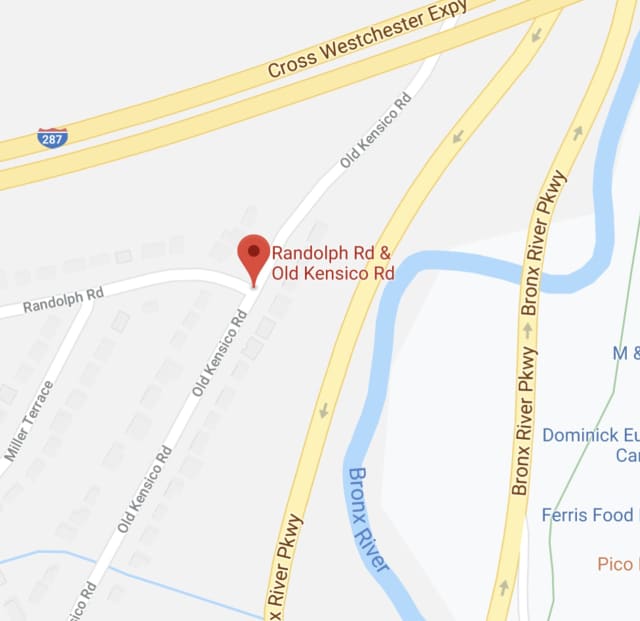
23-Year-Old Seriously Injured In Hit-Run Greenburgh Crash on Old Kensico Rd

A 23-year-old Greenburgh man was seriously injured during a hit-and-run incident on Old Kensico Road late last night by a vehicle that fled the scene, leaving the victim with serious injuries. 


The incident took place around 11:07 p.m., Sunday, Sept. 15, when Greenburgh Police came upon a pedestrian who had just been struck by a motor vehicle on Old Kensico Road where it intersects with Randolph Road, said Greenburgh Police Lt. Kobie Powell.
The victim, a resident of Old Kensico Road, had been dropped off by a friend and was crossing Old Kensico Road behind the friend's vehicle when a dark-colored vehicle traveling southbound on Old Kensico Road struck the victim propelling him into an adjacent driveway, Powell said.The vehicle that struck him stopped momentarily and then fled the accident scene southbound on Old Kensico Road, leaving the victim with sustained head injuries. He was transported by Greenburgh EMS to the Westchester County Medical Center, where he was admitted.The Fulton Park Civic Association and the Council of Greenburgh Civic Association have been at numerous Town Board meetings pleading with the Supervisor and his Board to install sidewalks along Old Kensico Road before something bad happens. Too late. They need to find a solution for speeding and resume engaging in traffic enforcement. Traffic enforcement has been abandoned for over a year now. The neighborhood also has many young kids walking to and from school and to bus stops early and in the afternoon without an adult present along Old Kensico Road. In fact, one of the stops is at this actual accident location. This situation needs to change. It's the only way to get A Better Greenburgh.

Greenburgh detectives are asking anyone with information to contact 914-989-1721.

Wednesday, January 23, 2019

Hilltop Farms Civic Association Letter Cries Foul

Below is a Hilltop Civic Association letter that was sent to their members and to us. 

We will happily post any letters to the Editor as long as they do not contain profanity or personal attacks. Unlike our Town Board, we are interested in what you have to say. All letters must have verifiable contact information which will be withheld if requested. 

Update: The Greenburgh School Board voted to change the date of the $114.6 million capital bond project to March 19th. There will be no vote on February 12. 

Sent: 1/16/2019 10:35:25 AM Eastern Standard Time
Subject: Report on School Board Meeting 1.15.19

Dear Neighbors:
Last night was the first meeting held by the school board re the $114.6 million bond referendum.

I am proud to say it was well attended by our board. We seized the opportunity to address the board and share our views. Stuart commented about the failure to maintain the premises, while Jack and I renewed our request to postpone the vote until May, so proper studies can be done and the full information shared with the voters. This once again fell on deaf ears.

We were told that this has been in the plans for eight months. Six months ago, I personally invited Superintendent Chase to attend our annual meeting. After accepting our invitation, I was informed five minutes before the meeting that she will be unable to attend, and no further attempt was made by her or her board to reach out to us on this matter.

The meeting was poorly attended by the voting community. It appears that the folks most informed about this are the parents of the school children who are carrying home news of the upcoming referendum in their school packs. My estimate is there was probably seventy-five people at the meeting, thirty percent of which were school board members, teachers and parents of students.

It appears that the school board is making a meager attempt to reach the voting public at large. If only the parents of school children show up at the polls, you can be assured that this bond issue will pass.

Listening to the school board's presentation, my personal opinion is they have allowed the school properties to fall into disrepair, and are now using their failure to maintain the premises as the justification to tear down everything and start anew.

We were shown pictures of falling plaster and poor windows (Not a $100 million repair). Our superintendent mentioned that one child was burnt by sitting too close to a radiator. A gentleman from Poets Corner pointed out, if they were really that concerned, why wasn't there a $10 piece of insulation between the child and the radiator. We spend more per child than any school district in Westchester County, yet the school board can't seem to find money to maintain the premises.

Not only are they bent on replacing the existing buildings, but want to include items that you and I cannot afford to provide; i.e., meditation rooms, relaxation rooms, Mandarin classes, new track, and on and on. This all being done at the taxpayers' expense while ignoring the environmental impact, incomplete traffic studies, and total indifference to the pockets of those in our area who cannot afford another dollar tax-wise. As one person said last night, "I don't know what I'm voting for, and when I don't know what I'm voting for, I vote no."

We have 1800 children in the school district. That constitutes 1800 voters in favor of this bond.

I dare say that most of us live in homes much older than the school property, and we are not knocking them. We have made the sacrifices and maintained our property, something which the school board has not.

It is incumbent that we get the word out, not just in our community. If you have friends who will be impacted by this, reach out to them. Don't assume they know about it. This is really not being broadcast as it should be.

Please make an effort to attend at least one of the meetings and voice your opinion.
Next year when your tax bill is a few thousand dollars higher, we will have no one to blame by ourselves if we do not spread the word.

Thank you.
Blase Spinozzi, President
Hilltop Farms Civic Association

Sunday, September 23, 2018

Join Westchester County Executive George Latimer at Town Hall

In response to a request earlier this year from Westchester County Legislator Alfreda Williams, the CGCA agreed to sponsor a meeting with Westchester County Executive George Latimer regarding the County budget. 

 You can ask the County Executive:
WHAT SERVICES ARE PROVIDED?
WHAT SPECIAL CONCERNS DO TAXPAYERS FACE?

LEARN THE ISSUES. 
ASK QUESTIONS.  EXPECT ANSWERS.

ATTEND THIS SPECIAL MEETING
WITH

WESTCHESTER COUNTY EXECUTIVE
GEORGE LATIMER


Monday, September 24, 2018
7:00 PM to 9:00 PM

Greenburgh Town Hall
(177 Hillside Avenue)

sponsored by
The Council of Greenburgh Civic Associations
THE COUNCIL OF GREENBURGH CIVIC ASSOCIATIONS IS A NONPARTISAN, UMBRELLA ORGANIZATION.
OUR PURPOSE IS TO PROVIDE INFORMATION AND ADVANCE THE COMMON INTERESTS OF MEMBER CIVIC GROUPS IN IMPORTANT
TOWN AFFAIRS.

Tax Information:
Many complain that a significant portion of your annual tax bill is for monies that go toward funding County operations. The county government portion of the property tax is about 15-18% of a property owner's total bill. The remaining property tax is collected by local governments, school districts and special districts (such as fire, water, sewers). The total sales tax varies in Westchester, as the county's largest four cities (White Plains, Yonkers, New Rochelle and Mount Vernon) collect a sales tax of their own. In addition, the state levies a sales tax as well as many unfunded mandates. Westchester County, as well as the Town of Greenburgh, also collects a tax on hotel occupancies. This tax was recently proposed and pushed by Democrats Tom Abinanti and Paul Feiner, helping to make this area and the Town in particular more expensive for travelers. It as passed unanimously by his Town Board.

Business taxes Westchester County offers the following tax advantages to businesses: 
• no local corporate income tax • no local personal income tax (except in Yonkers) 
• no personal property tax 
• no commercial rent tax 
• no unincorporated business tax Although a number of factors will ultimately determine an organization's tax liabilities, some generalizations can be made regarding taxes. New York State's maximum corporate income tax rate is 7.1%. In addition, tax savings may result from investment income treatment. 

The following sales tax rates apply in Westchester County: 
• State sales tax (4%) 
• Metropolitan Transportation Authority tax (0.375%) 
• County sales tax (except in Mount Vernon, New Rochelle, White Plains and Yonkers) (3%) 
• County sales tax (in Mount Vernon, New Rochelle, White Plains and Yonkers) (1.5%) 
• Municipal sales tax (in White Plains) (2.25%). 
• Municipal sales tax (in Yonkers, Mount Vernon and New Rochelle) (2.5%).\ 

*an additional 2.5% in the cities of Mount Vernon, New Rochelle, and Yonkers. An additional 2% in the City of White Plains. Tax information is courtesy of New York State Empire Development Corporation, a division of New York State Department of Economic Development. 102 WESTCHESTER COUNTY DEPARTMENT OF PLANNING DATABOOK Taxes Resident Taxes The County of Westchester does not collect a personal income tax, a factor which helps companies attract skilled, highly-paid employees. The personal income tax is assessed by New York State. New York City and the City of Yonkers assess an additional graduated income tax on residents. Connecticut also has a state income tax. 

Saturday, December 16, 2017

Dismissal Granted In Favor of Town Zoning Board of Appeals


It’s no secret that there exists a contentious relationship between the Town and the Edgemont community. So much so that some in Edgemont are seeking to incorporate and break away from the Town’s governance or mismanagement. There have been numerous issues over the last several years that have caused this alienation. Regardless of which issue(s) caused these residents to pursue incorporation, many say the straw that broke the camel's proverbial back was when Mr Feiner hired private investigators through the security company he hired through the judge he hired with unauthorized Town monies, to try to negate the petition signatures of those favoring incorporation. Some that we spoke to had been on the fence. But when they learned of this despot-like move, he lost their support.

Dromore Road is another Edgemont-centric debacle that has caused an uproar in their community. As we and others often say, “If it happens in one neighborhood, it's sure to happen in another, even yours.” Don’t believe us? One towering example is the Brightview Assisted Living Center in the Glenville section of the Town. Mr Feiner instructed his Board to be in favor of it at all costs and to vote it through. Not doing so would cause them to find themselves “Sonya’d”* and be on the outside looking in. Rightfully, Mr Jones, her replacement, tows the Feiner-line like a religious zealot. Anyway, after Brightview was plopped in the center of a small residential neighborhood of single family homes, we see the same scenario unfolding once again.

The Sprainbrook Nursery has operated on Underhill Road for years, owned and operated by the Krautter family. They are seeking to sell the property to an assisted living developer for roughly $3.5 million to use as their retirement nest egg. Many in the Edgemont community as well as the Greenville Fire District had initiated a court action to stop this oversized assisted living extravaganza at the now defunct nursery. They cited the Town's own newly adopted assisted living code which among other things mandates being with 200 feet of a state right of way and on a minimum of 4 acres of land. There's a little bit more to it but this is the gist of it. The Formation-Shelbourne proposal on the former Sprainbrook Nursery meets neither of these requirements. Also cited were safety issues of emergency vehicles responding on Underhill Road with more frequency. Fire departments will rarely discuss response conditions as a concern mostly because they will always get where they are going.

This past week the Judge ruled in favor of the Town's Zoning Board of Appeals and against the civic associations and fire district that had sued to stop the egregious variances that would be required to build this facility. Being shot down in court is difficult enough, but having it happen on what seems to be a minor technicality shows why people have lost faith in the courts system. The reason given by Judge Susan Cacace was that the petitioners (Edgemont Community Council, Council of Greenburgh Civic Associations and the Greenville Fire Districts) had not filed their action soon enough after the Zoning Board of Appeals rendered its decision. We quote, “Based on the foregoing, the respondents' motions to dismiss the instant petition to CPLR 3211(a) and 7804(f) are granted due to the petitioners' untimely commencement of this proceeding in violation of the applicable 30-day limitations period prescribed by Town Law 267-c(1), and therefore, this proceeding is hereby dismissed.”

No doubt an appeal can be made. However, there is no guarantee of this happening. Sadly, this is another oversized and inappropriate facility that will be built in what is now a densely residential community. The nursery was built years ago before little if any residential properties existed there. Back in that day a nursery fit the area just fine and was later grandfathered to stay. Nowadays, the buzz is about affordable (re: subsidized) housing, senior housing or assisted living. Usually, but not always, many of the new facilities get built and after a few short years are sold to another company, reaping financial benefits upon the developer - who then walks away. Or, they go into bankruptcy and leave their residents out in the cold with no savings or little hope of ever recouping their funds or even remaining years.

So now the charade at Town Hall begins. Mr Feiner will hail the decision and out of the other side of his mouth try to convince the public that he and his Board are going to listen to the public, do their due diligence, hold hearings, whatever it takes to help them decide if this project should move forward. It's a double-edge sword for him. He's forced to placate Edgemont and appear to be listening to them, but he's already promised Formation-Shelbourne their proposal to go through. Sure, he'll say he's received many phone calls supporting this facility, even from the residents in the area. But he will never say who or how many contacted him. He'll also say he received a ton of emails. Yet again, he will not divulge any names or real figures. 

The proposal for an assisted living facility may or may not be needed in the Town. Since this Town Board was so anxious to pass an assisted living zoning change in 2014 and then ignore it so readily and quickly after its passage proves the G10 was correct when they insisted at countless meetings that it was flawed and should not be passed. When Mr Feiner (who will vote no to placate Edgemont) and his Board pass this, they should only do so to a scaled down version of what is presented. And, when the developer says it has to be the size they are proposing to be cost-effective, we only hope the Town Board members voting yes will only do so to a reduced version of the proposal, working with the residents, fire district and civic associations instead of around them. Only then will we see A Better Greenburgh.

* Reference is of former Town Board member Sonya Brown, who was shunned by Mr Feiner and his Board and later dropped from his “ticket” after she exposed him for saying as candidates they should not bother to campaign in Fairview as those residents were unintelligent and they’d be wasting their time doing so there.

Sunday, November 29, 2015

Town Board Caught Napping

Citing a failure to accurately report the news and events of Westchester by the Journal News and other smaller area newspapers, ABG has learned that a new weekly local newspaper will be launched in the near future. “When the Gannett Corporation sucked up all the local editions of our community newspapers and put them under one banner as the Journal News, they created a huge paper with a talented staff but never ran it well. In fact, they ran it into the ground,” our source explained. ABG welcomes this new addition if they live up to their promise of not catering to the status quo with politicians and the like by ignoring the real or underlying story.

Case in point? This Monday night at Greenburgh Town Hall will be a public hearing for the re-striping and a few other minor changes in store for the Greenburgh Shopping Center between under the guise of improvements from the landlord seeking to perform re-striping of the existing parking lot, creating more parking for the disabled (re-striping), new crosswalks (re-striping) and stop signs (to coincide with re-striping), new shopping cart carriages, improvements in traffic flow (re-striping) and pedestrian safety enhancements and new ramps by the cinema for the disabled.

Why would this re-striping take an exhaustive plan and presentation from the landlord to the Town Board at the November 24th Work Session? Because the Town's Building Department and the Town Board dropped the ball! About two years ago the shopping center landlords took it upon themselves to re-stripe the parking lot without Town permits, plans or a public hearing, altering the already awkward and outdated driving patterns originated when the shopping center was created.

In true “Deflection Mode”, Mr Feiner claimed at the Work Session that the shopping center is very busy and cited increased activity because Acme supermarket has opened in place of the previous A&P. ABG estimates the activity to be about the same as it was when the A&P was still open and operating there. The changeover between the stores’ ownership, closing, restocking and opening took about two days. What he failed to pontificate on is that he, his Board and his Building Department completely ignored the new striping the landlord “just did” on their own, apparently during the night. So how did they find out about their blunder?

At a regular Town Board meeting, with the help of Ella Preiser and Madelon O’Shea of the Council of Greenburgh Civic Associations, Worthington Woodlands Civic Association President and community activist Dorrine Livson brought up the fact that the lot had had been re-striped, possibly creating several driving and pedestrian hazards. The Board remained immobile. Then the Council of Greenburgh Civic Associations was made aware of the issue from Ms Livson and got behind her. Together they went to the Commissioner of Community Development and Conservation and the Building Department. Perhaps when Mr Feiner realized the Town might have missed out on a fee or a fine that could be levied against the landlord, the Board began to pay attention.

Ms Livson’s diligence, along with that of the Council of Greenburgh Civic Associations, should be applauded for being watchdogs of the Town Board and Mr Feiner. Too often we see Mr Feiner cater to developers and favored landlords with their projects. How one slipped by him is, frankly, astonishing. As a note, you may recall Ms Livson went to court seeking Mr Feiner and the Town release a copy of the frequently used GBList to her. They refused and a judge has mandated it. The Town is appealing that decision. ABG believes more information, unfiltered, needs to flow to the residents and taxpayers and residents. To that end, we pledge to continue doing just that. We also welcome this new newspaper and hope they will add another valuable and serious voice to the mix. It’s what will make for A Better Greenburgh.